 The Marxist School of Sacramento
Point of View Speaker Series, Fall/Winter 2018:
Challenging Perspectives on Current Issues
Please note the assortment of locations, times and room numbers.
Thursday, September 27, 7-9 pm, Sierra 2 Center, Room 9, 2791 24th Street, Sacramento, CA (between Castro Way and 4th Ave.)
George Katsiaficas, "The Global Imagination of 1968: Revolution and Counterrevolution"
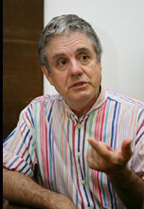 George Katsiaficas has written and edited eleven books, including The Global Imagination of 1968: Revolution and Counterrevolution (PM Press) on the global uprising of 1968 and European social movements. A longtime activist for peace and justice, he was a student of Herbert Marcuse. Currently, he is based at Chonnam National University in Gwangju, South Korea, and at Wentworth Institute of Technology in Boston.

The Global Imagination of 1968 brings to life social movements of the 1960s, a period of world-historical struggles. With discussions of more than fifty countries, Katsiaficas articulates an understanding that is neither bounded by national and continental divides nor focused on “Great Men and Women.” Millions of people went into the streets, and their aspirations were remarkably similar. From the Prague revolt against Soviet communism to the French rights movement, and campus eruptions in Latin America, Yugoslavia, the United States, and beyond, this book portrays the movements of the 1960s as intuitively tied together.
http://www.pmpress.org/content/article.php?story=GeorgeKatsiaficas
Monday*, October 8, 6:30-8:30pm, Cafe & Brew, 925 Third Street (at J Street), Sacramento, CA)
*note: Monday, not Thursday.
Victor Wallis, "Red-Green Revolution"
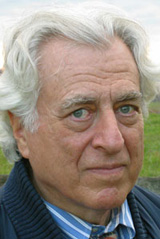 Victor Wallis, with a Ph.D. in Political Science from Columbia University, is a professor ofLiberal Arts at the Berklee College of Music, Boston, MA, where he has taught since 1996. He has been writing on ecological issues since the early 1990s. His writings have appeared in journals such as Monthly Review and New Political Science, and have been translated into thirteen languages.
His book, Red-Green Revolution (Political Animal Press) is an impassioned and informed confrontation with the planetary emergency brought about by accelerated ecological devastation in the last half-century. Wallis argues that sound ecological policy requires a socialist framework, based on democratic participation and drawing on the historical lessons of earlier efforts.
Wallis presents a relentless critique of the capitalist system that has put the 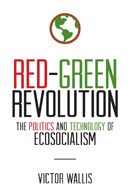 human species into a race against time to salvage and restore what it can of the environmental conditions necessary for a healthy existence. He then looks to how we might turn things around, reconsidering the institutions, technologies, and social relationships that will determine our shared future, and discussing how a better framework can evolve through the convergence of popular struggles, as these have emerged under conditions of crisis.
This is an important book, both for its incisive account of how we got into the mess in which we find ourselves, and for its bold vision of how we might still go forward.
https://www.victorwallis.com/
https://politicalanimalmagazine.com/product/red-green-revolution-the-politics-and-technology-of-ecosocialism/
Thursday, October 25, 7-9 pm, Sierra 2 Center, Room 9, 2791 24th Street, Sacramento, CA (between Castro Way and 4th Ave.)
Mat Callahan: "1968 and Beyond: Culture, Counterculture and Revolution"
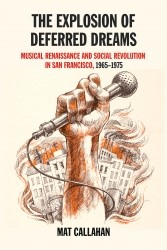
In his book The Explosion of Deferred Dreams Callahan explores these questions:
—why did "culture" suddenly assume such prominence in the Sixties?
—what distinguished the New Left and the Counterculture?
—why did the Reagan/Thatcher counterrevolution launch the "Culture Wars?"
—does "culture" have any usefulness for revolutionaries today?
As the fiftieth anniversary of the Summer of Love flooded the media with debates and celebrations of music, political movements, "flower power," "acid rock," and "hippies", The Explosion of Deferred Dreams offers a critical re-examination of the interwoven political and musical happenings in San Francisco in the Sixties. Author Mat Callahan explores the dynamic links between the Black Panthers and Sly and the Family Stone, the United Farm Workers and Santana, the Indian Occupation of Alcatraz and the San Francisco Mime Troupe, and the New Left and the counterculture.
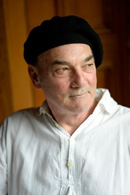 www.pmpress.org/content/article.php/MatCallahan
Mat Callahan is an author, musician and native San Franciscan. Most recently he re-published Songs of Freedom by James Connolly and launched the Songs of Slavery and Emancipation project. He is the author of five books including in 2017 The Explosion of Deferred Dreams: Musical Renaissance and Social Revolution in San Francisco, 1965–1975, (PM Press) and A Critical Guide to Intellectual Property (Zed Books). Callahan can be reached at: www.matcallahan.com.
All events at the Marxist School of Sacramento are free and open to the public. We rely entirely on voluntary donations to pay for our room rentals, copying, and mailing costs. Donations to The Marxist School of Sacramento are tax-deductible.
Checks may be made to The Marxist School of Sacramento and mailed to P.O. Box 160564, Sacramento, CA 95816, or donate on this site using our secure PayPal account.